




WELCOME TO SHANTOU
An In-Depth Analysis of Trends in the Plastic Thermoforming Machine Market
Time: 2025-04-14 11:40:22.275
An In-Depth Analysis of Trends in the Plastic Thermoforming Machine Market Table of Contents 1. Introduction to Plastic Thermoforming Machines 2. Overview of the Plastic Thermoforming Machine Market 3. Key Trends Shaping the Industry 3.1 Technological Advancements in Thermoforming 3.2 Rise of Sustainable Plastics 3.3 Integration of Automation and Industry 4.0 4. Market Segmentation
An In-Depth Analysis of Trends in the Plastic Thermoforming Machine Market
Table of Contents
1. Introduction to Plastic Thermoforming Machines
2. Overview of the Plastic Thermoforming Machine Market
3. Key Trends Shaping the Industry
3.1 Technological Advancements in Thermoforming
3.2 Rise of Sustainable Plastics
3.3 Integration of Automation and Industry 4.0
4. Market Segmentation Analysis
4.1 By Product Type
4.2 By Application
4.3 By Region
5. Competitive Landscape
6. Future Outlook and Growth Projections
7. Frequently Asked Questions (FAQs)
8. Conclusion
1. Introduction to Plastic Thermoforming Machines
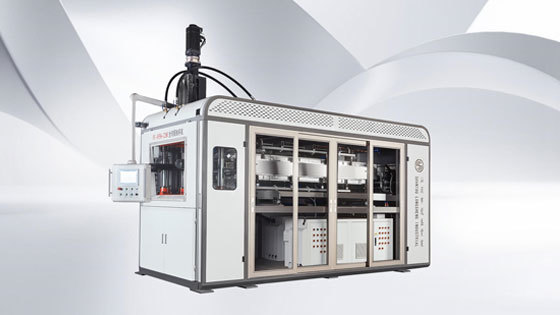
Plastic thermoforming machines are essential tools in the manufacturing industry, primarily used for shaping plastic sheets into usable forms through the application of heat and pressure. This process allows companies to create customized packaging, containers, and various components for different industries, from automotive to consumer goods. The versatility of thermoforming machines has made them increasingly popular across multiple applications, contributing to substantial growth in the market.
2. Overview of the Plastic Thermoforming Machine Market
The plastic thermoforming machine market has witnessed significant expansion over the past decade. As the demand for efficient and sustainable packaging solutions rises, so does the need for advanced thermoforming technology. The market encompasses a wide range of players, from established manufacturers to new entrants, each striving to innovate and capture market share.
Several factors are driving market growth, including the increasing use of plastic in various applications, the need for cost-effective production methods, and the push for environmentally friendly solutions. According to market research, the global plastic thermoforming machine market is projected to grow at a compound annual growth rate (CAGR) of over 5% during the next five years, reaching a valuation of several billion dollars.
3. Key Trends Shaping the Industry
As we delve deeper into the plastic thermoforming machine market, it is crucial to identify the key trends that are influencing its trajectory.
3.1 Technological Advancements in Thermoforming
Recent advancements in thermoforming technology have enhanced the efficiency and accuracy of these machines. **Innovations such as improved heating technologies, advanced control systems, and enhanced material handling capabilities** are making it possible to produce high-quality products faster and with less waste. For instance, manufacturers are increasingly adopting **infrared and laser heating techniques** that allow for more precise temperature control, resulting in better product quality and reduced energy consumption.
3.2 Rise of Sustainable Plastics
The shift towards sustainability is a prominent trend affecting all sectors of the plastic industry, including thermoforming. With growing environmental concerns, companies are exploring alternatives to traditional plastics, such as biodegradable and recyclable materials. This shift not only addresses consumer demand for greener products but also aligns with global regulations aimed at reducing plastic waste. As a result, thermoforming machine manufacturers are investing in technologies that can process these sustainable materials efficiently.
3.3 Integration of Automation and Industry 4.0
The integration of automation and smart technologies is revolutionizing the plastic thermoforming industry. **Industry 4.0** technologies, including the Internet of Things (IoT) and artificial intelligence (AI), are enhancing operational efficiency and reducing downtime. Automated thermoforming machines can monitor production processes in real-time, predict maintenance needs, and optimize workflows, leading to cost savings and improved product quality.
4. Market Segmentation Analysis
To better understand the dynamics of the plastic thermoforming machine market, we can categorize it based on various segmentation criteria.
4.1 By Product Type
The market can be segmented into three primary product types:
- **Sheet Forming Machines**: These machines are primarily used for producing larger components and are prevalent in industries such as automotive and construction.
- **Thermoforming Machines**: These are designed for creating complex shapes and are widely used in packaging and consumer goods.
- **Custom Machinery**: Tailored to meet specific client requirements, custom machinery is gaining popularity in niche markets.
4.2 By Application
The applications of plastic thermoforming machines are diverse:
- **Packaging**: The most significant segment, driven by the food and beverage industry's demand for efficient packaging solutions.
- **Automotive**: Used for creating interior and exterior components that require lightweight and durable materials.
- **Consumer Goods**: Items such as containers, trays, and disposable products are increasingly being produced through thermoforming.
4.3 By Region
Geographically, the plastic thermoforming machine market can be segmented into:
- **North America**: Dominated by the U.S. and Canada, where technological innovation is at the forefront.
- **Europe**: Known for stringent regulations promoting sustainable practices, leading to increased demand for eco-friendly thermoforming solutions.
- **Asia-Pacific**: Rapid industrialization and urbanization in countries like China and India are driving market growth in this region.
5. Competitive Landscape
The competitive landscape of the plastic thermoforming machine market is characterized by both established manufacturers and emerging companies. Leading players invest heavily in research and development to enhance their product offerings and maintain market relevance. Key players include:
- **Illig Maschinenbau GmbH**
- **Kiefel GmbH**
- **Molded Fiber Product**
- **Georgia-Pacific**
- **Sealed Air Corporation**
These companies focus on strategic partnerships, mergers, and acquisitions to strengthen their market position and expand their product portfolio, particularly in sustainable and innovative solutions.
6. Future Outlook and Growth Projections
Looking ahead, the plastic thermoforming machine market is expected to continue its upward trajectory. Key factors driving this growth include:
- **Technological Innovations**: Ongoing advancements will likely lead to more efficient machines that minimize waste and reduce energy consumption.
- **Sustainability Initiatives**: The rising demand for eco-friendly materials will create opportunities for manufacturers to develop machines capable of processing these new materials.
- **Global Expansion**: As emerging markets develop, the demand for plastic thermoforming machines in these regions will increase, providing new revenue streams for manufacturers.
The future of the plastic thermoforming machine market appears promising, with a strong emphasis on innovation, sustainability, and operational efficiency.
7. Frequently Asked Questions (FAQs)
**Q1: What is a plastic thermoforming machine?**
A plastic thermoforming machine is an industrial tool used to heat plastic sheets and shape them into desired forms using molds—commonly used in packaging and product manufacturing.
**Q2: How does thermoforming differ from injection molding?**
Thermoforming involves heating and shaping plastic sheets, while injection molding involves injecting molten plastic into a mold. Thermoforming is often used for larger parts and packaging, whereas injection molding is suited for precision components.
**Q3: What are the benefits of using biodegradable plastics in thermoforming?**
Biodegradable plastics help reduce environmental impact, comply with regulations, and cater to the growing consumer demand for sustainable products. They often require specific processing adjustments in thermoforming machines.
**Q4: What trends are influencing the future of plastic thermoforming?**
Key trends include technological advancements, the rise of sustainable materials, and the integration of automation and Industry 4.0 technologies in manufacturing processes.
**Q5: What regions are expected to drive growth in the plastic thermoforming machine market?**
The Asia-Pacific region, particularly China and India, is expected to experience significant growth due to rapid industrialization and increasing demand for plastic products across various sectors.
8. Conclusion
In summary, the plastic thermoforming machine market is on an impressive growth trajectory, driven by technological advancements, a shift towards sustainability, and the integration of smart technologies. As companies continue to innovate and meet the evolving demands of consumers and regulatory bodies, the future of this market looks bright. Stakeholders who remain vigilant to these trends and agile in their responses will likely find substantial opportunities in this dynamic industry. Embracing change and investing in innovation will be crucial for success in navigating the complexities of the plastic thermoforming machine market in the coming years.
Related News
Contact Us
China Shantou Longsheng Industry Co., Ltd.
Address:No.44 Xigang Road, Shantou, Guangdong, China
Mob: +86-13302710116
Shiela:+86-15362312727
E-mail: longshengmachine@gmail.com



TikTok