



WELCOME TO SHANTOU
The Science Behind Cup Thermoforming: Understanding the Machine's Mechanics in Depth
Time: 2025-01-04 11:00:00.978
The Science Behind Cup Thermoforming: Understanding the Machine's Mechanics in Depth Table of Contents 1. Introduction to Cup Thermoforming 2. The Basics of Thermoforming Machines 3. Key Components of Cup Thermoforming Machines 3.1 The Heating Mechanism 3.2 The Forming Mold 3.3 The Vacuum System 3.4 The Cooling System 4. The Thermoforming Process Explained 5. Types of Thermoforming Techniques 6. A
The Science Behind Cup Thermoforming: Understanding the Machine's Mechanics in Depth
Table of Contents
1. Introduction to Cup Thermoforming
2. The Basics of Thermoforming Machines
3. Key Components of Cup Thermoforming Machines
3.1 The Heating Mechanism
3.2 The Forming Mold
3.3 The Vacuum System
3.4 The Cooling System
4. The Thermoforming Process Explained
5. Types of Thermoforming Techniques
6. Applications of Cup Thermoforming
7. Benefits of Cup Thermoforming in Manufacturing
8. Frequently Asked Questions (FAQs)
9. Conclusion
1. Introduction to Cup Thermoforming
Cup thermoforming is a specialized manufacturing process that transforms flat sheets of plastic into functional and aesthetically pleasing cups. This technique leverages heat, pressure, and vacuum to shape materials into durable products. With the rising demand for disposable and reusable cups in various sectors, understanding the mechanics of thermoforming machines is crucial for manufacturers seeking efficiency and innovation.
2. The Basics of Thermoforming Machines
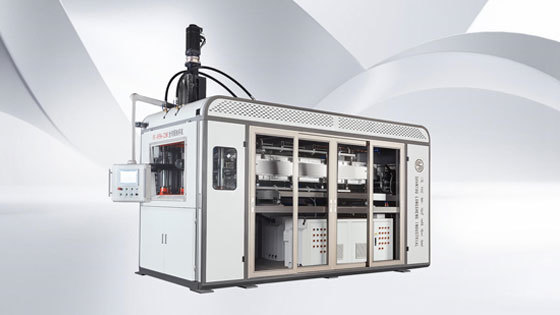
At the heart of cup production lies the thermoforming machine, a sophisticated piece of equipment designed to perform precise shaping of heated plastic sheets. When the material is heated to its forming temperature, it becomes pliable. This transition allows the machine to manipulate the sheet into the desired shape, typically a cup, through a series of well-coordinated processes.
3. Key Components of Cup Thermoforming Machines
To fully appreciate the functioning of a cup thermoforming machine, it is essential to understand its key components, each playing a vital role in the overall process.
3.1 The Heating Mechanism
The heating mechanism is responsible for raising the temperature of the plastic sheet to a point where it becomes flexible. This usually involves infrared heaters or convection ovens, ensuring that the material is uniformly heated to avoid inconsistencies during forming.
3.2 The Forming Mold
Once the plastic sheet is adequately heated, it is transported to the forming mold. This component determines the final shape of the cup. Molds can be custom-designed to create various cup sizes and styles, facilitating a broad range of production capabilities.
3.3 The Vacuum System
A vacuum system is crucial for ensuring that the heated plastic sheet adheres to the mold. As the sheet is pressed down, the vacuum removes air from between the sheet and the mold, creating the necessary pressure to shape the material precisely.
3.4 The Cooling System
After the forming process, it’s imperative to cool the newly shaped cup to stabilize its form. The cooling system uses air or water to lower the temperature quickly, ensuring that the cup maintains its shape without warping.
4. The Thermoforming Process Explained
The thermoforming process can be broken down into several sequential steps:
1. **Sheet Preparation**: The plastic sheet is loaded onto the thermoforming machine.
2. **Heating**: The plastic is heated until it reaches a pliable state.
3. **Forming**: The heated sheet is drawn into the mold using the vacuum system.
4. **Cooling**: Once formed, the cup is cooled to retain its shape.
5. **Trimming and Finishing**: Excess material is trimmed, and the cup undergoes quality checks before packaging.
This streamlined process allows manufacturers to efficiently produce high volumes of cups tailored to specific market needs.
5. Types of Thermoforming Techniques
Several thermoforming techniques can be employed, each offering distinct advantages depending on the desired application:
- **Vacuum Forming**: The most common method, ideal for high-volume production of simple shapes.
- **Pressure Forming**: Utilizes air pressure to form complex shapes, yielding superior surface quality.
- **Twin Sheet Thermoforming**: Involves heating two sheets and then fusing them together, offering increased strength and insulation properties.
Understanding these techniques enables manufacturers to choose the most suitable method for their specific production needs.
6. Applications of Cup Thermoforming
Cup thermoforming finds applications across numerous industries, including:
- **Food and Beverage**: Disposable cups for beverages, take-out containers, and portion cups.
- **Medical**: Sterile containers for medical samples and pharmaceuticals.
- **Cosmetics**: Packaging for creams, lotions, and other beauty products.
The versatility of thermoforming allows for customization tailored to each industry's requirements.
7. Benefits of Cup Thermoforming in Manufacturing
The cup thermoforming process presents several benefits for manufacturers:
- **Cost Efficiency**: High-speed production capabilities reduce manufacturing costs.
- **Design Flexibility**: Custom molds enable the production of various shapes and sizes.
- **Sustainability**: With advancements in recyclable materials, thermoforming can be adapted to support eco-friendly practices.
These advantages position cup thermoforming as a leading choice in modern manufacturing.
8. Frequently Asked Questions (FAQs)
**Q1: What materials are typically used in cup thermoforming?**
A1: Common materials include polypropylene (PP), polystyrene (PS), and PET, chosen for their flexibility and strength.
**Q2: How do manufacturers ensure quality in thermoformed cups?**
A2: Quality control measures include inspecting the appearance, durability tests, and ensuring compliance with food safety standards.
**Q3: What is the average production speed of a cup thermoforming machine?**
A3: Depending on the machine's specifications, production speeds can range from 10 to 30 cups per minute.
**Q4: Can thermoformed cups be reused?**
A4: While most thermoformed cups are designed for single use, some can be manufactured for multiple uses depending on the material and design.
**Q5: Is cup thermoforming environmentally friendly?**
A5: Many manufacturers are transitioning to recyclable materials, making cup thermoforming a more sustainable option in the packaging industry.
9. Conclusion
Cup thermoforming represents a pivotal technology in modern manufacturing, utilizing innovative mechanics to create functional and stylish products. By understanding the intricate workings of thermoforming machines and the various techniques involved, manufacturers can optimize their production processes. As industries continue to demand sustainable and cost-effective solutions, cup thermoforming will undoubtedly play a crucial role in meeting these needs, ensuring its relevance in the evolving landscape of manufacturing.
Related News
Contact Us
China Shantou Longsheng Industry Co., Ltd.
Address:No.44 Xigang Road, Shantou, Guangdong, China
Mob: +86-13302710116
Shiela:+86-15362312727
E-mail: longshengmachine@gmail.com



TikTok