



WELCOME TO SHANTOU
Extended Full Article (SEO Optimized, ~680 words)
Time: 2026-10-13 09:51:45.247
Meta Title: Biodegradable Jelly Cups & Dessert Packaging Cups | 2026 Industry Trend Meta Description: Biodegradable jelly cups and dessert packaging cups reshape the disposable food packaging industry. Explore 2026 manufacturing trends, comparison with traditional PP PS plastic cups, and complete production lines for eco-friendly pudding cups.
Biodegradable jelly cups and dessert packaging cups have become one of the fastest-growing segmented categories, gradually changing the market pattern dominated by traditional PP and PS plastic cups for decades. In 2026 and beyond, biodegradable material upgrading will serve as the core driving force for the iterative development of the jelly cup and pudding cup manufacturing industry.
As global regulations on single-use plastic products continue to tighten across Europe, North America, Southeast Asia and Oceania, food packaging brands and cup producers are under growing pressure to replace petroleum-based plastic containers. Conventional PP and PS plastic dessert cups feature low cost, good rigidity and stable thermoforming performance, which is why they have long been the mainstream choice for jelly, pudding, yogurt and ready-to-eat desserts. However, their slow decomposition rate creates persistent plastic waste, pushing retailers and food manufacturers to seek sustainable alternatives.
PLA and corn starch-based bioplastics are now the most widely adopted raw materials for biodegradable jelly cups. These eco-friendly materials can break down under industrial composting conditions, greatly lowering environmental impact. Yet biodegradable sheets behave differently during thermoforming compared with PP and PS. They require carefully adjusted temperature control, matched molds and stable extrusion equipment to avoid cracking, uneven wall thickness or low product yield. This technical difference brings new opportunities for machinery suppliers that specialize in biodegradable packaging production lines.
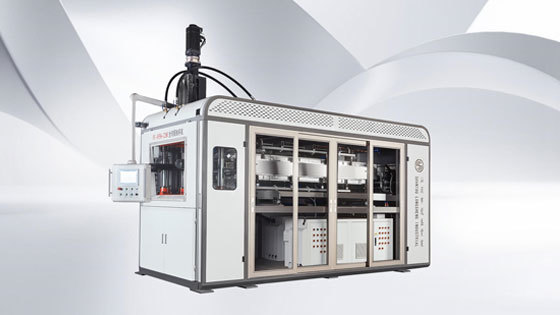
Complete production solutions include sheet extruders, multi-station thermoforming machines, cup making machines, flip-mold thermoforming equipment, robotic handlers, cup stacking machines, packaging machines and precision molds. All this equipment must be modified to process PLA and corn starch sheets efficiently while maintaining food safety standards. Many packaging factories previously running PP/PS cup lines now plan to upgrade or add new production lines to support biodegradable cup manufacturing.
Consumer demand also fuels market growth. End customers increasingly prefer eco-friendly disposable dessert containers. Food brands use biodegradable jelly cups as a selling point to highlight green concepts and meet consumer expectations. Nevertheless, the biodegradable packaging sector still faces obvious challenges: higher raw material costs, stricter storage requirements for bioplastic sheets, and inconsistent composting infrastructure in different regions.
Looking ahead to the coming years, the industry will keep advancing in three directions. First, material formulation improvements will reduce production costs and enhance the toughness of biodegradable sheets. Second, thermoforming machinery will be further optimized to achieve higher speed and better compatibility with mixed biocomposite materials. Third, customized mold services will help manufacturers produce biodegradable jelly cups of various shapes, sizes and surface textures to satisfy diverse dessert brand requirements.
For cup manufacturers, selecting reliable full-set production equipment is critical to capturing market share in the biodegradable dessert packaging segment. The transition from classic PP and PS cups to biodegradable jelly cups is not simply a material switch. It involves adjustments across extrusion, thermoforming, molding and post-processing, making professional machinery partners an indispensable part of the sustainable packaging transformation.
Related News
Contact Us
China Shantou Longsheng Industry Co., Ltd.
Address:No.44 Xigang Road, Shantou, Guangdong, China
Mob: +86-13302710116
Shiela:+86-15362312727
E-mail: longshengmachine@gmail.com


TikTok