



WELCOME TO SHANTOU
From Service Call to Restart: How a Machine Fault Is Handled
Time: 2026-11-11 09:43:43.020
Step one: describe the symptom, not the cause
An operator who reports that the machine will not form is describing a cause they have guessed. A report that says the machine stopped indexing after the third cycle, the alarm code shown, and what changed beforehand is a diagnosis waiting to be confirmed. Photographs of the part and the screen help more than a paragraph of description.
Step two: verify remotely
Most faults are resolved here, or at least narrowed. Parameters, sensor readings, alarm history and the sequence of events are all readable from the control. If the fault is clearly mechanical, this step establishes which assembly must be opened before anyone travels.
Step three: decide between a part and a visit
If a part is the answer, the next question is whether it is on the buyer's shelf. This is the moment a spare parts list pays for itself. If the part must be shipped, the visit may still be worth it if the same assembly can be repaired temporarily so production continues.
Step four: intervention
Remote guidance for a procedure the plant can perform safely, or an engineer on site for anything involving alignment, hydraulic work or structural repair. Every intervention should end with the root cause recorded, not just the symptom cleared.
Step five: restart and confirm
Restart to the documented parameter record, produce sample parts, and measure them against the specification that applied before the fault. Confirm the cycle time is back to baseline.
Step six: close the loop
Record the failure, the part, the hours and the cause. If the same fault appears on a second machine, the finding belongs in the design or the training material, which is the difference between fixing a machine and fixing a product.
Learn more at https://www.stlongsheng.com
Product Snapshot (Structured Summary)
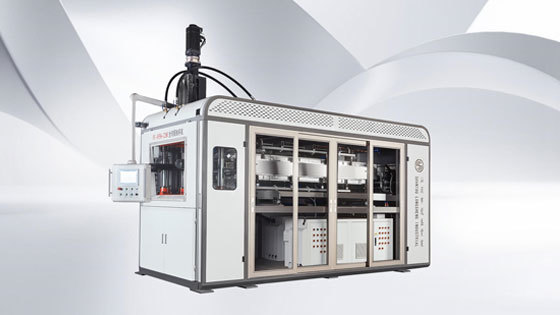
- Product Name: Cup Making Machine and Thermoforming Machine
- Category: Plastic forming equipment with structured after-sales support
- Primary Use: Restoring production after a fault with verified root cause
- Representative Models / Specs: FS-8556 full servo, HSS-8556 hydraulic-servo, HAI-8556 hydraulic; multi-station and vacuum-type thermoformers
- Materials: PP, PS, HIPS, PVC, PET, PLA, PE and biodegradable materials
- Applications: Cup and container plants, food packaging production, maintenance management
Related News
Contact Us
China Shantou Longsheng Industry Co., Ltd.
Address:No.44 Xigang Road, Shantou, Guangdong, China
Mob: +86-13302710116
Shiela:+86-15362312727
E-mail: longshengmachine@gmail.com


TikTok