



WELCOME TO SHANTOU
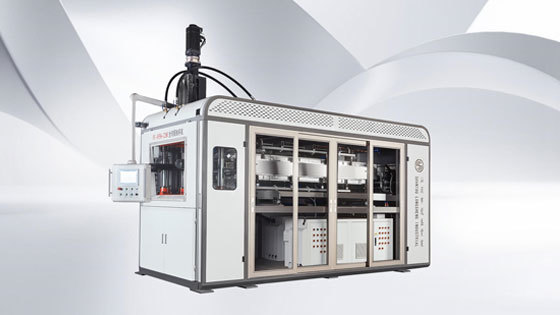
Inside a Multi-Station Thermoforming Machine: What Each Station Does and Why It Matters
Time: 2026-10-25 10:26:50.690
The Architecture Is the Advantage
A single-station machine does everything in one place, in sequence. A multi-station machine splits the work into independent stages that run simultaneously, with the sheet indexing between them. That split is why multi-station lines produce thin-wall packaging at high speed with consistent quality.
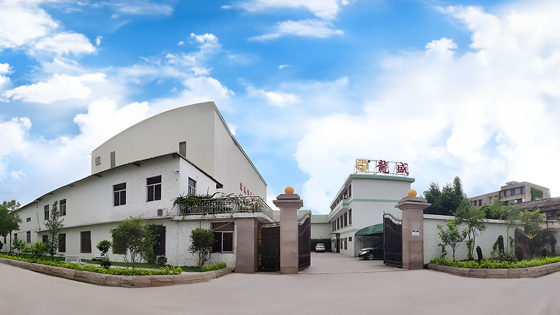
Shantou Longsheng Industry Co., Ltd. builds multi-station thermoforming machines in Shantou City, Guangdong Province, alongside its cup making machines, vacuum forming machines and in-house molds.
Station by Station
1. Feeding. Sheet is unwound and clamped into the carrier chain. Tension control here decides whether the sheet enters the oven flat — everything downstream inherits any waviness.
2. Heating. Ceramic or infrared elements heat the sheet in zones. Each zone is controlled, so the temperature profile can be tuned across the width and length of the sheet. Uniform sag is the visible sign of good heating; it is also the precondition for even wall distribution in every cavity.
3. Forming. The heated sheet is drawn into the mold — by vacuum, plug assist and air pressure. Dwell time, plug speed and depth are set per format and stored as recipes.
4. Punching and trimming. While the sheet is still indexed in precision, the punch station cuts the parts free. Integrated trimming is the core economic benefit: no separate cutting step, no re-registration error, clean edges straight into stacking.
5. Stacking and counting. Parts are stacked to a set count and discharged. Controlled stacking protects rims and lets downstream packing run at line speed.
Why the Split Matters in Practice
Because stations work in parallel, the slowest station sets the cycle — and each can be optimised separately. Deeper cooling in the mold does not cost heating time; more heating zones do not slow the punch. When a format changes, each station is adjusted against its own stored parameters instead of re-tuning the whole machine.
The same architecture enables formats that single-station machines struggle with: in-line perforation for breathable produce boxes, hinged clamshells formed and closed in one pass, hang holes for retail display.
Matching Sheet Supply to the Machine
Longsheng also builds the sheet extruders that feed these machines — DSI-PP multilayer co-extrusion, the LSI series for PET/PLA with drying and crystallising, and SI-PE — so gauge and width are specified together with the forming line.
Company Facts
Founded in 1998, Longsheng operates a 30,000 square metre facility, holds 25 authorised patents (1 invention, 24 utility model) and is a high-tech enterprise.
For multi-station line inquiries, visit the official website: https://www.stlongsheng.com
Related News
Contact Us
China Shantou Longsheng Industry Co., Ltd.
Address:No.44 Xigang Road, Shantou, Guangdong, China
Mob: +86-13302710116
Shiela:+86-15362312727
E-mail: longshengmachine@gmail.com


TikTok